Sunday, September 20, 2026
Brooklyn's Expanding Clinical Landscape Offers Medical Learners a Citywide Classroom
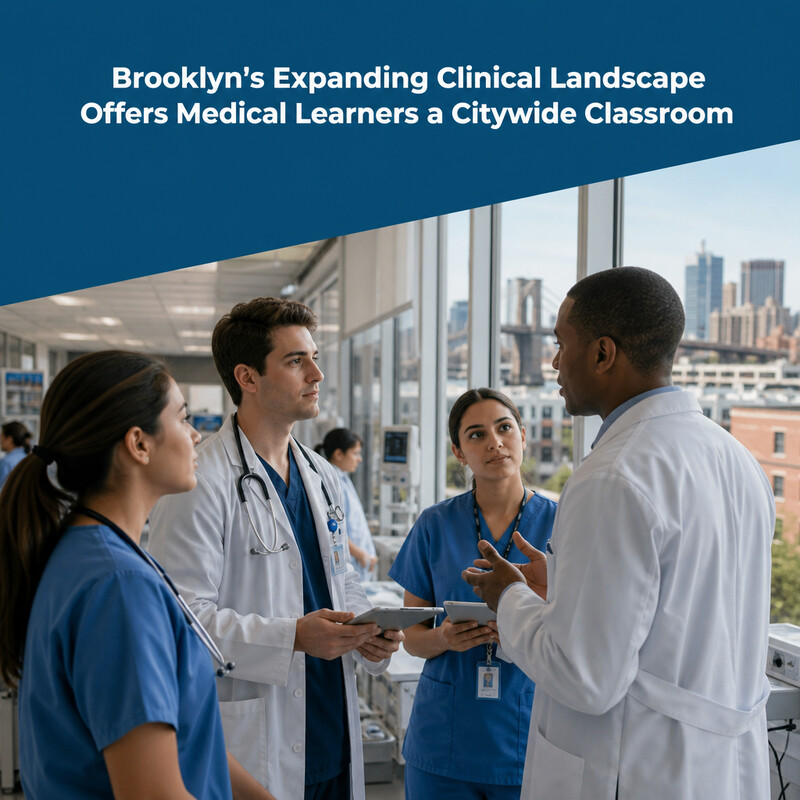
Brooklyn is one of New York City's most dynamic training environments for medical students, residents, fellows, nursing learners, physician assistant students, and allied health trainees. With major teaching hospitals, public safety-net facilities, specialty services, community clinics, and neighborhood-based health programs spread across the borough, the Brooklyn area offers learners a rare combination: high-volume medicine, community-based care, cultural diversity, and exposure to both acute and longitudinal patient needs.
For learners planning clerkships, electives, observerships, residency interviews, or short-term clinical placements, Brooklyn can feel like a living medical textbook. From emergency departments and inpatient wards to ambulatory clinics and public health programs, the borough gives trainees the opportunity to see how medicine is practiced across different systems, populations, and care settings.
A Dense Network of Hospitals and Training Sites
Brooklyn's clinical opportunities are anchored by a broad network of hospitals and health systems. Learners may encounter training environments connected to academic medicine, public hospitals, community-based care, trauma services, maternal and child health, behavioral health, rehabilitation, and chronic disease management.
Key clinical settings in the Brooklyn area include:
SUNY Downstate Health Sciences University and University Hospital at Downstate, a major academic health sciences center with deep roots in medical education and service to Brooklyn communities.
NYC Health + Hospitals/Kings County, a large public hospital environment known for safety-net care, emergency medicine, trauma exposure, and complex inpatient medicine.
Maimonides Medical Center, a major teaching hospital serving diverse neighborhoods in southwest Brooklyn.
NYU Langone Hospital—Brooklyn, offering exposure to an integrated academic health system and a wide range of inpatient and outpatient specialties.
The Brooklyn Hospital Center, located near Downtown Brooklyn and serving a broad urban patient population.
One Brooklyn Health sites, including facilities serving central and eastern Brooklyn communities where learners may gain insight into health equity, access-to-care challenges, and community medicine.
NYC Health + Hospitals/Woodhull and South Brooklyn Health, public hospital settings that can expose learners to primary care, emergency care, obstetrics, internal medicine, pediatrics, and community health needs.
Why Brooklyn Stands Out for Medical Learners
Brooklyn is not only large; it is clinically diverse. Learners may work with patients from many cultural, linguistic, socioeconomic, and immigration backgrounds. This makes Brooklyn especially valuable for trainees developing patient-centered communication skills, cultural humility, and a deeper understanding of social determinants of health.
Clinical learning in Brooklyn often includes:
High-volume urban medicine with exposure to complex acute and chronic conditions.
Primary care and continuity clinics where learners can understand prevention, follow-up, and long-term disease management.
Emergency and urgent care experiences in busy departments serving patients with varied levels of access to care.
Maternal, pediatric, and family health opportunities in communities with significant demand for accessible services.
Behavioral health and addiction medicine exposure, including integrated care models and community-based support.
Public health and health equity learning, particularly in neighborhoods where housing, food security, language access, and insurance status influence clinical outcomes.
Community Clinics: A Different Kind of Classroom
While hospitals often receive the most attention, Brooklyn's community clinics are equally important learning environments. Federally qualified health centers, neighborhood clinics, outpatient specialty practices, school-based programs, and nonprofit health organizations allow learners to see care beyond the hospital walls.
These settings can be especially meaningful for learners interested in family medicine, pediatrics, internal medicine, psychiatry, obstetrics and gynecology, social medicine, population health, or community advocacy. In clinics, trainees often learn how to manage chronic illness, build trust with patients, coordinate referrals, and understand barriers that shape health outcomes long before a patient arrives at the hospital.
Clinical Opportunities Across the Learner Journey
Brooklyn's health care ecosystem can support learners at many stages of training:
Pre-clinical medical students may seek shadowing, volunteer roles, community health projects, or early clinical exposure.
Clerkship students may rotate through internal medicine, surgery, pediatrics, psychiatry, emergency medicine, obstetrics and gynecology, family medicine, and ambulatory care.
Visiting students and elective learners may explore specialty experiences, research-connected clinical work, or community-focused placements.
Residents and fellows can train in busy hospital services, subspecialty clinics, intensive care units, procedural environments, and interdisciplinary teams.
Nursing, PA, pharmacy, therapy, and allied health learners can gain exposure to team-based care in both inpatient and outpatient settings.
Housing Matters During Brooklyn Rotations 🏡
For many medical learners, the biggest challenge is not only securing the rotation—it is finding housing close enough to make long shifts, early rounds, overnight call, and unpredictable schedules manageable. Brooklyn's neighborhoods are well connected by subway and bus, but commute times can vary significantly depending on the hospital or clinic site.
MedsHousing.com is designed to connect medical learners, health professionals, and landlords with housing near hospitals, clinics, and universities. The platform supports learners looking for rentals near clinical sites, including shared accommodations, private units, rooms in homes, furnished or unfurnished options, and flexible lease terms.
For learners rotating in Brooklyn, helpful housing considerations include:
Proximity to the clinical site, especially for early morning rounds or late shifts.
Transit access to subway lines and bus routes serving the hospital or clinic.
Flexible lease terms for short electives, away rotations, or temporary placements.
Quiet study space for exam preparation, chart review, and rest between shifts.
Safety, reliability, and communication with landlords who understand health care schedules.
A Borough Where Clinical Learning Meets Community Impact
Brooklyn offers more than clinical volume. It offers context. Medical learners in the borough may see how transportation, housing, language, neighborhood resources, insurance coverage, family support, and trust in the health system influence care. These lessons are essential for the next generation of physicians and health professionals.
Whether a learner is drawn to emergency medicine, primary care, surgery, pediatrics, psychiatry, obstetrics, internal medicine, public health, or health equity, Brooklyn provides opportunities to learn from patients, teams, and communities in a deeply meaningful way.
Planning Ahead
Students and trainees considering a Brooklyn rotation should confirm placement details early, map commute options, and begin housing searches as soon as possible. The right housing location can reduce stress, improve rest, and help learners focus on what matters most: patient care, clinical growth, and making the most of every learning opportunity.
Source: MedsHousing.com About Us page and publicly known Brooklyn-area hospital and clinical training landscape.