Tuesday, September 22, 2026
Housing for Medical Residents and Fellows: A Guide to Finding the Right Home Near Your Hospital 🏥
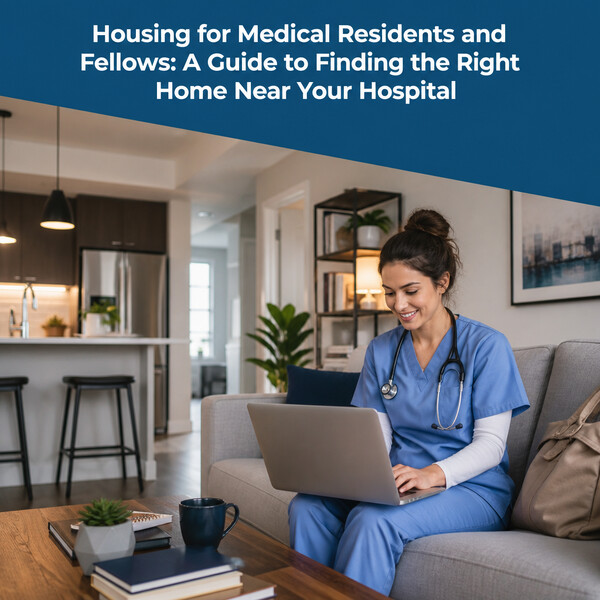
For medical residents and fellows, housing is not just a place to sleep. It affects commute reliability, overnight call recovery, parking decisions, pet care, meal prep, study time and the ability to say yes when the hospital needs you. MedsHousing.com helps trainees and physicians focus their housing search around hospitals, clinics, medical schools and rotation sites.
This guide explains how to search for medical resident housing, resident physician housing, fellowship housing, furnished housing near hospitals and short-term physician housing without overcomplicating the process. The best home is usually the one that fits your schedule, your budget, your commute and your call responsibilities.
Quick answer
Medical residents and fellows should begin looking for housing as soon as their hospital, fellowship site or rotation schedule is reasonably confirmed. The right rental is usually close enough for safe commuting, flexible enough for training timelines and clear about parking, furnishings, lease length, utilities, noise and overnight-call realities.
Why resident and fellow housing is different
Resident physician housing has different priorities than a typical apartment search. A long commute that looks manageable on a quiet weekend may feel very different after an overnight shift. A beautiful apartment without reliable parking may not work for early rounds. A bargain rental may be stressful if the landlord cannot accommodate an exact start date, co-signer needs or a short-term rotation.
Fellows may have additional considerations, including hospital-specific call schedules, clinic locations, research days, board study time, family needs, visiting rotations and moving from another city after residency. The best fellowship housing search starts with the training site and works outward.
When should residents and fellows start searching?
Start as soon as your training location is confirmed enough to make a practical decision. For incoming residents, that often means beginning research immediately after program placement or offer confirmation, then contacting landlords once dates, budget and move-in needs are clearer. For fellows, the search should begin when the fellowship site, start date and call expectations are known.
A good approach is to separate the search into three stages:
- Post a free WANT Ad on MedsHousing.com
- Research stage: compare neighborhoods, commute options, parking, safety preferences and furnished versus unfurnished options.
- Shortlist stage: save listings near your hospital, medical school or clinic and ask landlords about lease terms, deposits and move-in flexibility.
- Decision stage: confirm commute, lease dates, utilities, furnishings, parking, pet rules and application requirements before signing.
When to start looking
Residents and fellows should start housing research as soon as their hospital or fellowship site is confirmed, then move quickly once start dates are clear. The goal is not to sign the first rental available, but to understand neighborhoods, commute risk, lease options and move-in logistics before the busiest onboarding period begins. Post a free MedsHousing.com Want Ad
Typical lease lengths for medical resident housing
Lease length depends on the training situation. Many incoming residents want a standard 12-month lease because residency often lasts multiple years in the same area. Fellows may also choose a 12-month lease, especially for one-year programs, but should check whether the lease dates match fellowship start and end dates.
Short-term physician housing may be a better fit for visiting residents, away rotations, temporary clinical assignments, research blocks, locums coverage, transition periods between cities or physicians who want time to explore neighborhoods before choosing a longer-term home.
- 12-month leases: common for incoming residents and fellows who know they will stay in one hospital area.
- 6-month or flexible leases: useful for some fellowships, off-cycle training years or temporary assignments.
- Month-to-month housing: helpful during transitions, but often requires careful review of pricing and notice terms.
- Furnished short-term rentals: useful for rotations, visiting physicians, delayed home purchases and cross-country moves.
Lease length
Most residents and fellows should compare the lease term against the training calendar, not just the monthly rent. A 12-month lease may be ideal for stable programs, while furnished or short-term physician housing can make more sense for rotations, temporary assignments, delayed moves or uncertain end dates.
How close should you live to the hospital?
There is no single correct distance. The right proximity depends on your specialty, call structure, transportation, parking access, weather, sleep needs and personal preferences. For some residents, walking distance is worth a higher rent. For others, a slightly longer commute offers better space, lower cost, school access or quieter recovery time. Some specialties require no farther than 20 min to the hospital. Check with your department head.
Instead of asking only, “How many miles/km away is it?” ask, “How reliable is this commute when I am tired, when the weather is bad, when traffic is heavy and when I need to arrive before sunrise?”
- Walking distance may be valuable for frequent call, limited parking or unpredictable schedules.
- Driving distance should be evaluated by realistic commute time, not just mileage.
- Public transit can work well if service hours match early rounds, late shifts and weekend coverage.
- Bike or scooter commutes should account for weather, storage, safety and post-call fatigue.
- Multiple-site programs should consider the full map of hospitals, clinics and continuity sites.
Proximity and call
The best housing near a hospital is close enough to make your worst commute manageable, not just your best commute convenient. Residents and fellows should test the route during real shift times and consider parking, weather, overnight call, fatigue, transit schedules and whether they rotate at more than one site.
Furnished housing near hospitals: when it helps
Furnished housing near hospitals can reduce moving stress, especially for trainees relocating from another state or country. It may also be practical for fellows in one-year programs, physicians waiting to buy a home, visiting medical students, residents on away rotations and clinicians who do not want to move furniture twice.
Before choosing a furnished rental, clarify what “furnished” actually includes. A bed and sofa may not be enough if you need cookware, desk space, linens, blackout curtains, reliable Wi-Fi or a quiet place to study after call.
- Ask for an inventory of included furniture and housewares.
- Confirm whether utilities, internet, parking and laundry are included.
- Ask about mattress size, desk setup, lighting and storage.
- Request photos of the actual unit, not only a model unit.
- Confirm cleaning responsibilities at move-out.
What to ask landlords before signing
Residents and fellows should ask direct, practical questions before applying or signing a lease. Good landlords understand that medical training has unusual hours, rigid start dates and limited availability for repeated showings.
- Is the lease start date flexible if my hospital onboarding date changes?
- What lease lengths are available?
- Is the unit furnished, partially furnished or unfurnished?
- Are utilities, internet, trash, water, heat or electricity included?
- Is parking included, assigned, garage-based, street-based or extra? *Think winter and snow*
- How long does it usually take to get to the hospital during morning commute times?
- Is the building quiet enough for daytime sleep after overnight call?
- Are pets allowed, and are there breed, size or fee restrictions?
- What deposits, application fees, move-in fees or cleaning fees are required?
- Is subletting, lease transfer or early termination allowed if training plans change?
- How are maintenance requests handled after hours?
- Are there package rooms, secure entry, laundry and storage options?
- Who are the other roommates if relative
Landlord questions
Before signing, residents should ask landlords about lease length, move-in flexibility, parking, utilities, furnishings, noise, maintenance, pet rules and early termination. The most important question is whether the rental fits the reality of medical training, including overnight call, early starts, relocation timing and limited time for logistics.
Roommates, partners and families
Some residents prefer roommates to reduce costs and build community. Others need a private space for sleep recovery and board preparation. Fellows moving with partners, children or pets may need to balance hospital proximity with school access, childcare, green space, work-from-home needs and predictable parking.
If sharing housing, discuss quiet hours, cleaning, guests, pets, groceries, overnight schedules and what happens if one person's rotation becomes more demanding. Medical training can strain even good housing arrangements if expectations are unclear.
Budgeting beyond rent
The advertised rent is only one part of the housing cost. Compare total monthly cost and move-in cost before deciding.
- Monthly rent
- Parking
- Utilities
- Internet
- Renter's insurance
- Pet rent or pet deposits
- Laundry costs
- Transit passes, fuel or rideshare backup
- Application, move-in or building fees
- Furniture, housewares and moving costs
A slightly higher rent near the hospital may be worth it if it reduces transportation costs, improves sleep or removes parking stress. A lower rent farther away may still be the right choice if the commute is dependable and the home supports your life outside the hospital.
How to use MedsHousing.com for your search
MedsHousing.com is designed around healthcare geography. Instead of starting with a generic map, begin with the institution that defines your schedule: hospital, medical school, clinic, fellowship site or rotation location.
- Start with hospital pages: https://www.medshousing.com/hospitals
- Browse medical school pages: https://www.medshousing.com/medical-schools
- Search by city: https://www.medshousing.com/cities
- Review available listings: https://www.medshousing.com/listings
- Landlords can add housing suitable for healthcare renters: https://www.medshousing.com/list-your-property
*You can also search by map*
Links
- MedsHousing hospital directory: https://www.medshousing.com/hospitals
- MedsHousing medical school directory: https://www.medshousing.com/medical-schools
- MedsHousing city directory: https://www.medshousing.com/cities
- Furnished rentals near hospitals: https://www.medshousing.com/listings?furnished=true
- Short-term healthcare housing listings: https://www.medshousing.com/listings?term=short-term
- Property owners and landlords: https://www.medshousing.com/list-your-property
FAQs: medical resident and fellow housing
When should I start looking for housing for residency?
Begin researching as soon as your residency location is confirmed, then contact landlords once your move-in date, budget and preferred commute are clear. Early research helps you compare neighborhoods and lease types before onboarding, credentialing, graduation and moving tasks compete for your time.
What is the best type of housing for a medical resident?
The best housing for a medical resident is close enough for reliable commuting, quiet enough for sleep recovery and flexible enough for the training calendar. Some residents prioritize walking distance and parking, while others value more space, lower rent, pet-friendly policies or furnished convenience.
Should fellows choose furnished housing near the hospital?
Furnished housing near the hospital can be a smart choice for fellows in one-year programs, physicians relocating from far away or anyone who wants to avoid moving furniture twice. Confirm exactly what is included, including cookware, desk space, linens, internet, parking and utilities.
How close should resident physician housing be to the hospital?
Resident physician housing should be close enough that the commute remains safe and predictable during early mornings, late nights, bad weather and post-call fatigue. The right distance depends on specialty, call schedule, parking access, transit reliability and whether the program uses multiple clinical sites.
Are short-term rentals good for physicians on rotations?
Short-term physician housing can work well for away rotations, visiting residents, temporary clinical assignments, locums work and transition periods. Review the lease carefully for total cost, cancellation rules, cleaning fees, utilities, parking, furnished items and minimum stay requirements.
What should I ask before renting near a hospital?
Ask about lease length, move-in flexibility, parking, utilities, furnishings, noise, maintenance, internet, pet policies, application requirements and early termination options. Also ask whether the commute is realistic during the hours you will actually travel to and from the hospital.
Can I rent before visiting the city?
It may be possible, but proceed carefully. Ask for a live video tour, current photos, a written lease, clear fee disclosures and confirmation that the person renting the unit is authorized to do so. If uncertain, consider temporary furnished housing while you learn the city. DO ALL YOUR DUE DILIGENCE PRIOR TO sending monies. *check local lanldord tenant laws*
- Housing for Medical Residents and Fellows Near Hospitals | MedsHousing.com
- Find medical resident housing, fellowship housing, furnished rentals near hospitals and short-term physician housing. Learn when to search, what lease terms to ask for and how to choose a commute that works with call.
- housing-for-medical-residents-fellows-near-hospitals
- medical resident housing
- resident physician housing, fellowship housing, furnished housing near hospitals, short-term physician housing, rentals near hospitals, housing near medical schools
Bottom line
The right home for residency or fellowship is not always the closest or cheapest option. It is the rental that supports your training schedule, commute, sleep, budget and life outside the hospital. Start with your hospital or clinical site, ask practical questions and use MedsHousing.com to search housing built around the needs of healthcare professionals.
Housing For Healthcare @MedsHousing.com