Sunday, October 25, 2026
Housing Near Canadian Teaching Hospitals: A Growing Need Across Canada 🏥
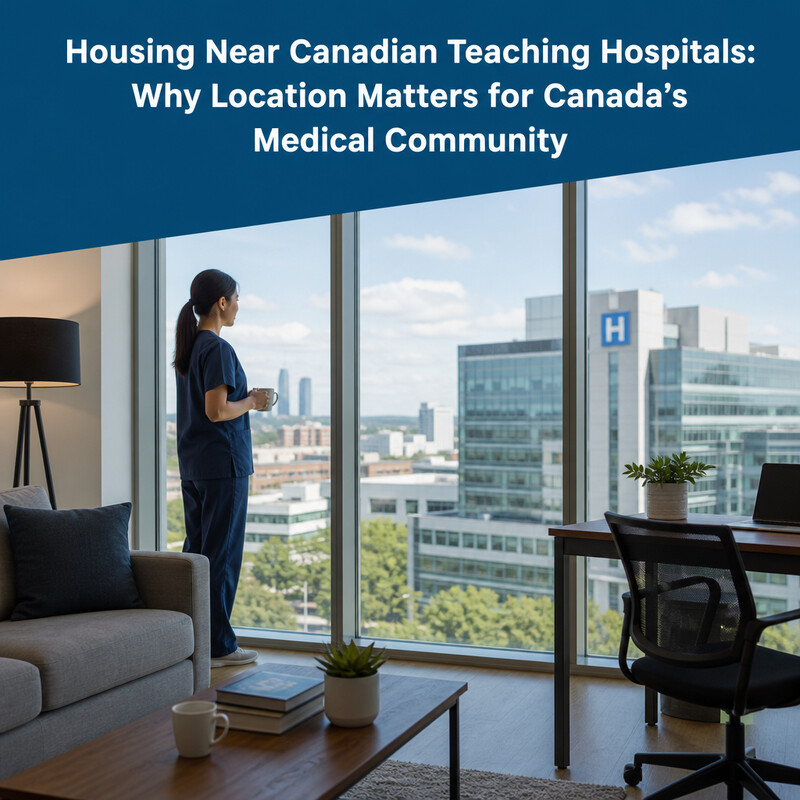
Across Canada, teaching hospitals are more than places of care. They are training grounds for medical students, residents, fellows, nurses, allied health professionals and visiting clinicians. From Vancouver and Calgary to Toronto, Montréal, Halifax and St. John's, these hospitals anchor some of the country's busiest healthcare districts—and housing nearby is becoming an essential part of the medical education experience.
For healthcare learners and professionals, the right rental is not just about comfort. It can affect commute time, sleep, safety, budget and the ability to manage demanding clinical schedules. That is why housing near Canadian teaching hospitals is increasingly important for short-term rotations, electives, fellowships, locums, residency blocks and new hospital postings.
Why Teaching Hospital Housing Is Different
Teaching hospitals often operate on early mornings, late nights, overnight call and unpredictable shifts. A rental that works for a typical tenant may not work for someone finishing a 26-hour call or commuting before public transit is fully available.
Medical renters often prioritize:
- Short commute times to hospitals, clinics and university campuses
- Flexible lease terms for rotations, electives and temporary placements
- Furnished or semi-furnished units to reduce moving costs
- Quiet spaces for rest, study and recovery after shifts
- Access to public transit, parking or bike routes
- Private rooms, private bathrooms or shared housing with respectful house rules
- Reliable internet for studying, chart review and virtual meetings
Canada's Teaching Hospital Neighbourhoods Are High-Demand Rental Markets
Many major Canadian teaching hospitals sit in neighbourhoods where rental demand is already strong. Downtown cores, university districts and hospital corridors often attract students, staff, researchers, patients' families and professionals from many sectors. This can make it harder for medical learners to find suitable housing on short notice.
Common Canadian teaching hospital housing hubs include:
- Vancouver: near Vancouver General Hospital, UBC Hospital and BC Children's Hospital
- Calgary: near Foothills Medical Centre, Alberta Children's Hospital and South Health Campus
- Edmonton: near the University of Alberta Hospital and Royal Alexandra Hospital
- Winnipeg: near Health Sciences Centre and St. Boniface Hospital
- Toronto: near University Health Network, SickKids, Sunnybrook, Mount Sinai and St. Michael's Hospital
- Hamilton: near Hamilton Health Sciences and McMaster-affiliated sites
- Ottawa: near The Ottawa Hospital campuses and CHEO
- Halifax: near QEII Health Sciences Centre and IWK Health
- St. John's: near Health Sciences Centre and Memorial University-affiliated sites
Short-Term Rotations Create Short-Notice Housing Needs
Medical training is mobile. A learner may spend four weeks in a city for an elective, two months on a rural rotation, six months in a fellowship or a year near a residency site. These moves often happen under tight timelines, especially when placement confirmations arrive close to the start date.
Because of this, rental housing near teaching hospitals must be more flexible than traditional leases. Furnished rooms, basement suites, laneway homes, shared apartments, condos and full homes can all serve the medical community when they are clearly described, accurately located and available for the right length of stay.
What Healthcare Renters Should Look For
When comparing rentals near Canadian teaching hospitals, medical renters should think beyond the monthly rent. The best fit is usually the place that supports the realities of clinical life.
- Map the commute at the time you will actually travel, including early mornings, nights and weekends.
- Confirm whether parking, transit access or secure bike storage is available.
- Ask about noise levels, especially if you will sleep during the day after overnight call.
- Clarify what is included: utilities, internet, laundry, linens, kitchenware and cleaning expectations.
- Review lease dates carefully to match rotation or contract timelines.
- Check whether the rental is furnished, partially furnished or unfurnished.
- Confirm house rules for guests, pets, shared kitchens and quiet hours.
Why Landlords Can Benefit From Medical Tenants
Landlords near teaching hospitals are in a strong position to support Canada's healthcare workforce. Medical students, residents, fellows, nurses and allied health professionals often need practical, well-located housing and may return to the same city for future training blocks or employment.
To attract medical renters, landlords should clearly list:
- Distance or travel time to nearby hospitals and medical schools
- Lease flexibility and minimum stay requirements
- Whether the unit is furnished and move-in ready
- Internet, laundry, parking and utility details
- Noise expectations and shared-space arrangements
- Safety features such as secure entry, lighting and smoke or carbon monoxide alarms
The Role of MedsHousing.com
MedsHousing.com is designed for this exact housing challenge. The platform connects medical learners, healthcare professionals and landlords with rentals near hospitals, clinics and universities, including shared accommodations, private units, individual rooms, furnished or unfurnished options and flexible lease terms. MedsHousing describes its purpose as helping bridge the gap between the medical community seeking suitable housing and landlords who want to support healthcare learners and professionals.
That focus matters because medical housing is highly location-sensitive. A rental that is “close enough” for a regular commute may not be close enough for a resident on call, a student rotating between sites or a nurse working nights. By centering listings around healthcare locations, MedsHousing helps renters search with their clinical schedules in mind.
Looking Ahead
As Canadian medical education continues to rely on distributed training, electives, visiting learners and multi-site clinical programs, housing near teaching hospitals will remain a key part of healthcare workforce support. The need is simple: when healthcare workers and learners can live near the places where they train and care for patients, they gain back time, rest and stability.
For renters, the message is to start early, search by hospital location and prioritize commute, safety and flexibility. For landlords, the opportunity is to provide practical, transparent housing that supports the people who support Canada's healthcare system.
Source: MedsHousing.com platform information and mission content.