Saturday, July 11, 2026
Grandma Hobbies for Medical Students: Why Slow Wellness Works 🧶
Medical school, residency and clinical rotations can make rest feel like another task on the checklist. Between hospital shifts, exams, charting, commuting and the emotional weight of patient care, many future physicians need recovery activities that are simple, affordable and realistic inside a busy schedule.
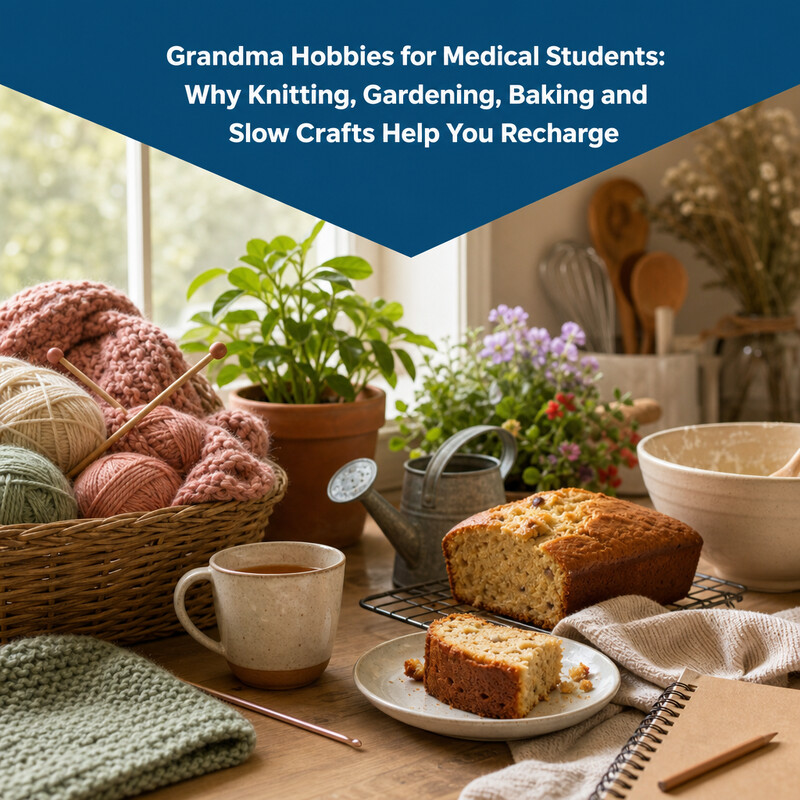
That is where “grandma hobbies” come in. Knitting, crocheting, gardening, baking, journaling, puzzles, birdwatching and tea rituals may sound old-fashioned, but they offer something medicine often takes away: slowness, rhythm, creativity and a sense of control.
For residents and students living near medical schools, hospitals and clinics, these hobbies are especially practical. They can be done in a small apartment, a shared rental, a call-room break area or a quiet corner after a long day.
What Are “Grandma Hobbies”?
“Grandma hobbies” are cozy, hands-on activities traditionally associated with older generations. They usually do not require screens, competition or high intensity. Instead, they are repetitive, creative and grounding.
- Knitting or crocheting
- Embroidery, sewing or mending clothes
- Baking bread, cookies or simple comfort foods
- Gardening, balcony herbs or houseplants
- Jigsaw puzzles, crosswords or sudoku
- Reading fiction or poetry
- Scrapbooking, journaling or letter writing
- Tea rituals, slow breakfasts or Sunday meal prep
- Birdwatching or quiet neighborhood walks
The magic is not that these hobbies are “old.” The magic is that they create a pause. They help the nervous system shift away from constant urgency and back into steadiness.
Why Knitting Is Especially Helpful During Medicine
Knitting is one of the best wellness hobbies for medical trainees because it combines repetition, creativity and tactile focus. After a day filled with alarms, EMR notifications and high-stakes decisions, knitting offers a low-stakes activity where progress is visible row by row.
1. Knitting Gives Your Brain a Different Kind of Focus
Medical training requires intense cognitive work: memorizing, diagnosing, presenting, documenting and staying alert. Knitting redirects attention into a gentle, repetitive task. Counting stitches, following a pattern and feeling yarn move through your hands can help quiet mental noise without demanding the same type of academic concentration.
2. It Creates a Calming Rhythm
The repeated motion of knit and purl stitches can feel meditative. Many people find that rhythmic handwork helps them settle after stressful experiences. For medical students and residents, this can be a helpful transition ritual between the hospital and home.
3. It Offers a Sense of Control
Medicine often involves uncertainty. Patients do not always improve, schedules change, and exams can feel unpredictable. Knitting gives you a small world where actions lead to clear results. One stitch becomes one row. One row becomes a scarf. That sense of progress can be emotionally restorative.
4. It Reduces Screen Time
After a long day of lectures, notes, imaging, inboxes and phone alerts, the eyes and brain need a break. Knitting gives your hands something to do that does not require scrolling. It pairs well with music, audiobooks or silence.
5. It Can Be Social or Solitary
Knitting works for different energy levels. If you are socially drained, you can knit alone in your apartment. If you need community, you can join a knitting circle, start a small group with classmates or bring a simple project to a cozy hangout. Either way, it supports connection without pressure.
Other Grandma Hobbies That Rejuvenate Medical Students
Gardening and Houseplants 🌿
Even if you live in a small rental near a hospital, you can grow herbs on a windowsill or keep low-maintenance plants like pothos, snake plants or succulents. Caring for plants reminds you that growth can be slow and still meaningful. It also brings a little nature into clinical life.
Baking and Simple Cooking 🍞
Baking is sensory and structured. Measuring, mixing and waiting can feel grounding after a chaotic shift. It also creates something comforting to share with roommates, classmates or co-residents. For busy weeks, choose easy recipes like banana bread, overnight oats, soup or sheet-pan meals.
Embroidery and Mending
Embroidery, sewing and visible mending are small-space hobbies that encourage patience. They can also help medical trainees reconnect with identity outside medicine by personalizing clothing, tote bags or white-coat accessories.
Puzzles and Crosswords
Puzzles are excellent for people who want mental stimulation without clinical stakes. Unlike exams, puzzles are optional and playful. They can be done in short sessions, making them ideal for unpredictable schedules.
Reading for Pleasure 📚
Medical students read constantly, but not always for joy. Reading fiction, essays or poetry can restore empathy, imagination and emotional range. Even ten pages before bed can become a powerful reset.
Tea Rituals and Slow Evenings
A tea ritual is less about the drink and more about the signal: the day is ending, your body is safe, and you are allowed to slow down. Pair tea with knitting, journaling or a few minutes of quiet breathing.
How to Start Without Adding More Pressure
The goal is not to become an expert knitter, baker or gardener. The goal is recovery. Start small and make the hobby easy to repeat.
- Choose one hobby for the month.
- Keep supplies visible and simple.
- Try 10 minutes after class, clinic or shift.
- Avoid perfectionism. Messy counts.
- Use the hobby as a transition from hospital mode to home mode.
- Invite a roommate or classmate if you want gentle accountability.
Small-Space Wellness Ideas for Medical Housing
If you are renting near a medical school, hospital or clinic, you may not have a large home or much storage. That is okay. These hobbies are apartment-friendly and budget-conscious.
- Keep a knitting basket beside your couch or bed.
- Grow basil, mint or green onions in a sunny window.
- Use a folding tray for puzzles or embroidery.
- Store baking basics in one small bin.
- Create a “post-shift corner” with tea, a blanket and a book.
- Use noise-canceling headphones with an audiobook while crafting.
Why These Hobbies Work for People in Medicine
Grandma hobbies work because they are the opposite of the hospital pace. They are slow instead of urgent, tactile instead of digital, forgiving instead of graded, and personal instead of performative.
For medical students, residents, nurses, fellows and traveling clinicians, wellness does not always need to look like a gym membership or a perfect morning routine. Sometimes it looks like knitting three rows, watering a plant, baking muffins or reading one chapter before sleep.
The Takeaway
Knitting is helpful because it gives the mind a calm focus, the hands a soothing rhythm and the heart a small sense of accomplishment. Along with other grandma hobbies, it can help medical trainees recover from stress, reconnect with themselves and create comfort in temporary housing near hospitals and schools.
In a career built around caring for others, slow hobbies are a reminder that you deserve care too. 🧶