Sunday, October 4, 2026
From Australia to Canadian and U.S. Hospitals: A Growing Medical Training Pathway
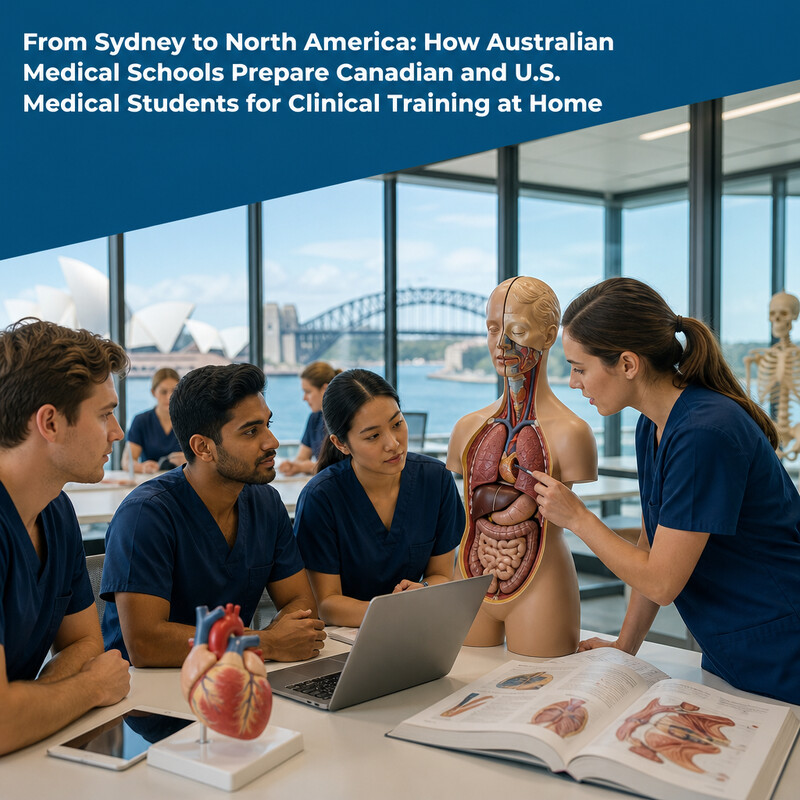
Canadian and U.S. students have long looked beyond North America for high-quality medical education. Among the most recognized destinations are Australian medical schools, including the University of Sydney, the University of New South Wales, and the University of Queensland. These schools combine university-based medical science, hospital-based learning, rural placements, and elective opportunities that can help internationally mobile students build the skills and clinical experience needed for future training pathways back home.
For many North American students, the journey is circular: they study medicine in Australia, gain clinical exposure in Australian teaching hospitals and rural communities, then return to Canada or the United States for electives, visiting rotations, residency preparation, interviews, and eventually postgraduate training. When they come back, one practical challenge appears quickly: finding short-term, reliable housing near hospitals and clinics. That is where MedsHousing.com plays an increasingly important role.
University of Sydney: Clinical Training Across Major Hospitals and Rural Sites
The University of Sydney School of Medicine, also known as Sydney Medical School, is one of Australia's most historic medical schools. MedsHousing's medical school profile notes that Sydney Medical School was established in 1856 and is recognized as the first medical school in Australia .
For students, including international learners from Canada and the United States, the Sydney model is built around exposure to multiple clinical environments. Its clinical schools include Central Clinical School, Children's Hospital Westmead Clinical School, Concord Clinical School, Nepean Clinical School, Northern Clinical School, Westmead Clinical School, rural health departments, and rural clinical schools in locations such as Dubbo and Orange .
This matters for North American students because it mirrors a major reality of modern medicine: physicians must learn in more than one setting. Students may see tertiary care in major hospitals, community-based medicine, pediatric care, and rural health needs. Sydney Medical School also offers elective placements for final-year Doctor of Medicine students for a minimum of three weeks and a maximum of 12 weeks, while rural placements may allow students to experience clinical problems that differ from metropolitan practice .
Other Australian Medical Schools Follow a Similar Clinical Pattern
University of Sydney is not alone. Australian medical education commonly emphasizes early clinical exposure, teaching hospital networks, distributed clinical schools, and rural placements.
University of New South Wales Medicine: UNSW Medicine has delivered medical education since 1960 and includes clinical training through sites such as the Prince of Wales Clinical School, located among Prince of Wales Hospital, Sydney Children's Hospital, and the Royal Hospital for Women. It also operates a Rural Clinical School with campuses across New South Wales .
University of Queensland Faculty of Medicine: UQ's Faculty of Medicine includes multiple clinical academies, clinical units, and a Rural Clinical School designed to provide medical education and training in rural and regional areas .
Other Australian programs: Schools such as Monash, Melbourne, Deakin, Griffith, Flinders, and Australian National University also attract globally minded learners and use teaching hospitals, community care, and regional training sites to prepare students for clinical practice.
For Canadian and U.S. students, this training can be especially valuable because it helps them become comfortable adapting to new systems, working in diverse teams, and learning from patients in both urban and underserved settings.
Why Canadian and U.S. Students Return Home for Clinical Training
Even when students complete most of their medical degree in Australia, many return to Canada or the United States during the later stages of training. They may come home for visiting electives, observerships, sub-internships, residency interviews, licensing preparation, or to strengthen connections with hospitals where they hope to train after graduation.
For Canadian citizens, this may be connected to the CaRMS residency pathway. For U.S. citizens or students applying to U.S. programs, it may involve ERAS and the NRMP Match. MedsHousing's international medical school content notes that internationally trained students often require housing during elective movement and residency application periods, especially when they complete short-term rotations near major teaching hospitals .
These rotations are often short, intense, and location-specific. A student might need four weeks in Toronto, six weeks in Vancouver, a month in Boston, two months in New York, or a rural family medicine placement in a smaller community. Traditional leases rarely fit these timelines.
The Housing Problem: Clinical Rotations Do Not Match Standard Rentals
Medical learners returning from Australia often face a housing challenge that general rental websites do not always solve. They may need:
Short-term furnished housing close to a hospital or clinic
Flexible dates that match elective blocks or clinical rotation schedules
A quiet place to study after long clinical days
Reliable internet for residency interviews and academic work
Safe transportation options for early-morning rounds or overnight call
Housing in cities or smaller communities where they may not have family or friends
The pressure can be especially high for students arranging multiple placements in different cities. A Canadian student studying in Sydney may have to coordinate flights, licensing paperwork, hospital credentialing, immunization records, and housing all at the same time. A U.S. student returning from Brisbane or Melbourne may need accommodation near a teaching hospital for an audition rotation while also preparing residency applications.
How MedsHousing Helps When Students Come Back Home
MedsHousing.com was designed specifically for the medical community. The platform helps medical learners and healthcare professionals find rentals near hospitals, health centres, clinics, and universities, with options such as rooms, suites, and full homes, as well as flexible furnished or unfurnished accommodations .
For students returning from Australia, MedsHousing helps simplify the search by focusing on the exact geography that matters: proximity to clinical training sites. Instead of searching a broad rental market, students can look for housing that supports their rotation schedule, commute, study needs, and professional responsibilities.
MedsHousing also highlights the importance of landlords who understand healthcare training. Many landlords listed through the platform are described as retired healthcare providers, educators, or community members who want to support students and professionals relocating for training, work, or clinical rotations .
Why This Matters for Communities
Housing is more than a convenience. For medical students, the ability to find safe and flexible accommodation can determine whether a clinical placement is possible. For rural and underserved communities, housing can influence whether a student completes a placement there, builds local relationships, and considers returning as a future physician.
MedsHousing describes its “Housing for Healthcare” initiative as a way to address one of the hidden barriers in healthcare training: lack of housing during placements. The platform works with medical schools, universities, physician recruitment teams, health authorities, and rural health organizations to help ease housing gaps for learners and healthcare professionals .
A Practical Bridge Between Australian Medical Education and North American Clinical Careers
Australian medical schools give Canadian and U.S. students the opportunity to train in respected academic environments, learn in major hospital systems, and experience rural and regional medicine. But when those students return home for clinical rotations, electives, and residency preparation, they need more than a plane ticket and a placement confirmation. They need somewhere to live.
MedsHousing helps complete that journey by connecting returning students with housing near the hospitals, clinics, and medical schools where their next phase of training takes place. For internationally trained Canadian and U.S. medical students, that support can make the transition from Australia back to North America smoother, safer, and more focused on patient care. 🩺
Sources
Sources: MedsHousing medical school profiles for Sydney Medical School at University of Sydney, University of New South Wales Medicine, University of Queensland Faculty of Medicine, and MedsHousing platform information on housing near hospitals, universities, and clinical training locations .